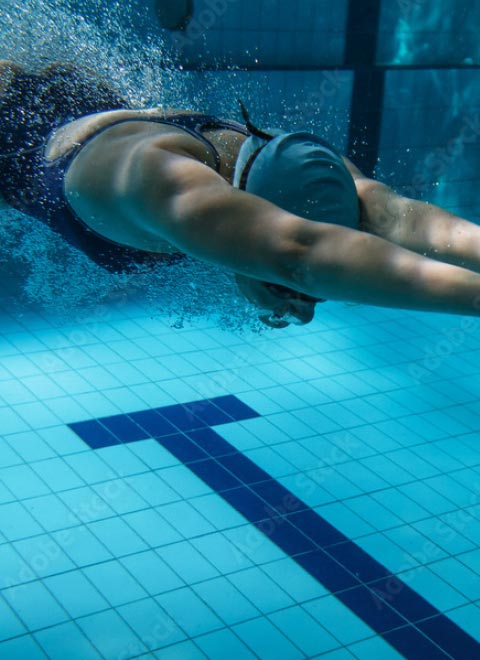


A council-run leisure facility is much more than just a business. Customers increasingly expect leisure facilities and aquatic centres to be community hubs and responsible operators, promoting health and wellbeing, championing sustainability, embracing accessibility and encouraging inclusion for different cultures.
This months we’re helping you level-up your social-impact game by exploring five ways Australian and New Zealand leisure facilities are innovating to better serve the communities they operate in.
Sustainability isn’t just good for the planet – it’s good for your bottom line too. Leisure and fitness centres are major electricity users, particularly those with aquatic facilities requiring large amounts of energy to maintain stable pool temperatures and filter water effectively, so green technologies can make a meaningful difference.
Few places do this better than Brimbank Aquatic and Wellness Centre in Victoria. This amazing facility became Australia’s first carbon-neutral aquatic centre when it opened in 2022 and is completely powered by renewable energy. The centre has 500kW solar panels on its roof and uses a thermal-energy storage system to provide extra heating when required, complemented by a thermally-efficient building envelope. As an all-electric facility it doesn’t produce any greenhouse-gas emissions.
Minimising water consumption is another way facilities can reduce their impact on the earth. Bold Park Aquatic Centre in Western Australia successfully saved 600kL of water per year and reduced annual electricity costs by $6,600 through retrofitting shower heads to reduce the flow rate of water.
Facilities can also help the environment by encouraging electric cars and bicycles with dedicated parks and chargers. Reducing avoidable waste of energy and materials can be achieved by using paperless sign-up for digital member signups, automated trigger messaging communications and a online customer portal – all possible with our flagship leisure management software Envibe.
Community exercise programs improve people’s health and have far-reaching effects into the overall wellbeing of communities, delivering positive mental as well as physical health outcomes.
Programs like PCYC NSW’s Fit for Life combine morning exercise with a healthy breakfast and mentorship by positive role models, leading to improved school attendance and pro-social behaviour from its 11- to 16-year old participants. This holistic program also aims to boost confidence, leadership and communication skills, as well as building positive relationships with young people and local police officers.
Similar exercise programs to encourage active lifestyles for all age groups are run across Australia and New Zealand, championing the value of maintaining physical and mental health.
Accessibility improvements are transforming how people with disabilities, parents with prams and the elderly experience leisure facilities.
Central Coast Council’s Peninsula Leisure Centre features submersible water wheelchairs for direct pool access, wheelchair-accessible gym equipment and new widened contactless entry points supplied by Entrance Control, to make the facility more accessible and inclusive.
These disability-friendly upgrades are part of the centre’s four-year Disability Inclusion Plan, which recognises that improving access removes barriers to participation and allows the whole community to come together to enjoy leisure and recreation activities – a win-win situation.
Welcoming people of all sensory abilities is the latest way to make your facility more inclusive. The $500 million Parakiore Recreation and Sport Centre in Christchurch promises to provide New Zealand’s first multi-sensory aquatic experience with interactive water features – fountains, jets, misting sprays and bubble columns to support play for individuals with sensory or disability needs.
Incidentally, the centre will also be the first facility of its kind in New Zealand to harness the warmth from the city’s wastewater system to fully meet its heating requirements, when it opens in late 2025. The energy of hot water going down the drain from sinks, showers, washing and dishwashing machine will be put to good use.
Simple changes can make big differences too. Many facilities now offer quiet hours with reduced lighting and minimal announcements to create low-sensory environments for people with autism, ADHD, or other sensory sensitivities, avoiding painful overstimulation.
Creating inclusive communities means actively engaging with diverse demographics. Envibe’s comprehensive member management allows you to track participation across different community groups, while making it simple to schedule cultural-activity sessions.
For example, the National Centre of Indigenous Excellence (NCIE), uses Envibe to analyse attendance of the Aboriginal and Torres Strait Islander children it educates in sport, art, education and culture at its Sydney gym and aquatic centre. This allows them to gauge which programs are generating the most interest and engagement so they can offer more of what indigenous communities want.
These five approaches demonstrate a variety of unique ways Australian and New Zealand leisure facilities are maximising their community impact. By embracing environmental sustainability, evidence-based health programming, comprehensive accessibility, sensory inclusion, and cultural diversity, your facility can create change that extends far beyond your walls.
Ready to maximise your facility’s social impact? Contact our friendly support team today to discover how Envibe can help you implement programs that make a real difference to your community.